Joint Legal Custody in CT: A Mindful Guide for Co-Parents
Divorce asks a great deal of both parents but when children are involved, the decisions you make together after separation carry as much weight as any made during the marriage. Understanding joint legal custody is one of the most important steps toward building a stable, child-centered life on the other side of this transition.
At Divorce The Right Way, we guide Connecticut families through this process with clarity, intention, and a commitment to keeping children's well-being at the center of every decision.
What Is Joint Legal Custody?

Joint legal custody, sometimes called shared legal custody or shared parental responsibility, is a legal arrangement in which both parents share the right and responsibility to make major decisions about their child's upbringing. This typically includes decisions about education, healthcare, religious upbringing, and extracurricular activities.
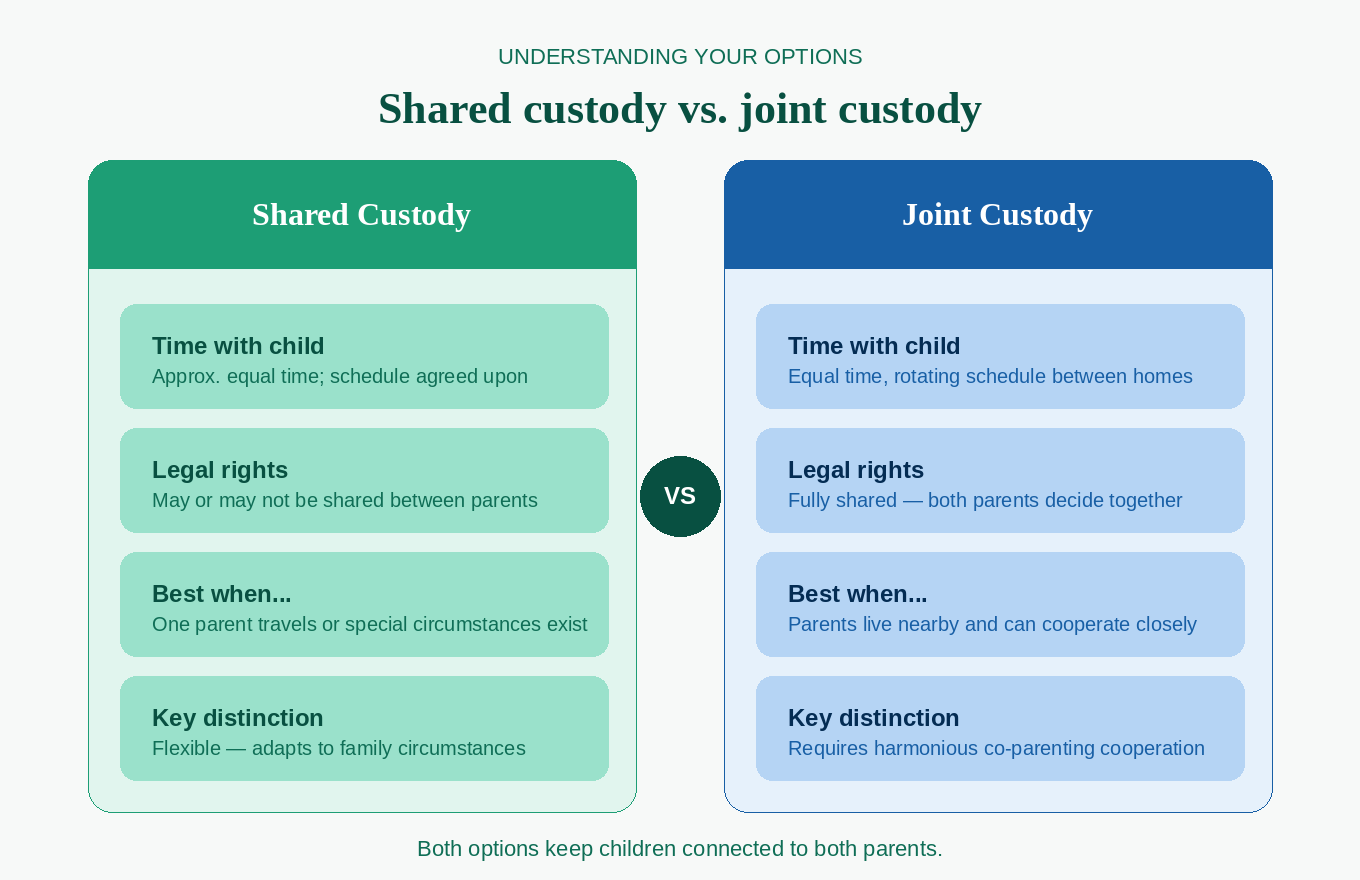
It is important to understand the distinction between two types of custody:
Joint legal custody addresses decision-making authority — who has a voice in shaping the major choices that affect your child's life.
Joint physical custody addresses parenting time — where the child lives and how time is divided between both homes.
It is entirely possible to share legal custody without sharing physical custody equally. A child may primarily reside with one parent while both parents retain equal rights to participate in major decisions. Understanding this distinction allows you to pursue an arrangement that genuinely fits your family's circumstances.
The Core Elements of Joint Legal Custody

Successful joint legal custody depends on a shared commitment to cooperation. The following elements form the foundation of any workable arrangement.
Shared Decision-Making Both parents collaborate on major decisions affecting the child. This is not about agreement on every detail, it is about maintaining an active, engaged role in the decisions that shape your child's future.
Open Communication Effective communication between co-parents is essential. This means ongoing dialogue, mutual respect, and a consistent focus on what serves the child rather than what may serve individual preferences.
Flexibility and Willingness to Compromise Co-parents will not always agree, and that is to be expected. What matters is the capacity to set aside conflict and return to a shared question: what does this child need right now?
A Child-Centered Approach Joint legal custody, at its core, is a legal commitment to putting your child first. Every major decision, from school choice to medical care, needs to be evaluated through that lens.
How Joint Legal Custody Works Day to Day

Under a joint legal custody arrangement, co-parents work together on major decisions. These decisions typically fall into four primary areas:
Education — school selection, tutoring, and educational expenses
Healthcare — medical treatment, vaccinations, and choice of providers
Religion — religious practices and upbringing
Extracurricular Activities — sports, arts, and other activities
Day-to-day decisions like meals, bedtimes, social plans, generally remain with whichever parent has physical custody at that time.
Co-parents can structure their decision-making in several ways:
Collaborating on all major decisions jointly
Dividing decision-making by area of responsibility (e.g., one parent leads on education, the other on healthcare)
Making major decisions together while each parent handles routine choices independently
Many parenting plans also include a process for resolving disagreements, including, in some cases, a designated tie-breaker provision, so that important decisions do not stall when parents reach an impasse.
The Benefits of Joint Legal Custody

When it functions well, joint legal custody offers meaningful advantages for children and parents alike.
Both parents remain actively involved in the decisions that shape their child's life.
Children benefit from stability and continuity, maintaining strong relationships with both parents through the transition.
Research supports better outcomes: children in joint legal custody arrangements tend to show stronger emotional well-being, higher self-esteem, and better academic performance.
Cooperative co-parenting reinforces itself — the more both parents commit to collaboration, the more natural it becomes over time.
Common Challenges and How to Address Them

Joint legal custody requires a genuine commitment to cooperation. For some families navigating the aftermath of a difficult separation, that is no small thing. Common challenges include:
Disagreements over major decisions that create stress or delay
Difficulty maintaining communication when the relationship has been strained
Power struggles that pull focus away from the child's actual needs
These challenges are real, and they are manageable. Approaches that help include:
Keeping the child's needs as the explicit reference point in every disagreement
Documenting agreements in writing to prevent confusion or conflict later
Working with a mediator to facilitate productive conversations when communication breaks down
Using co-parenting tools such as OurFamilyWizard, which provides secure messaging, shared calendars, and clear documentation of communication
At Divorce The Right Way, our mediation services are specifically designed to help co-parents navigate these moments without returning to an adversarial dynamic.
Joint Legal Custody in Connecticut
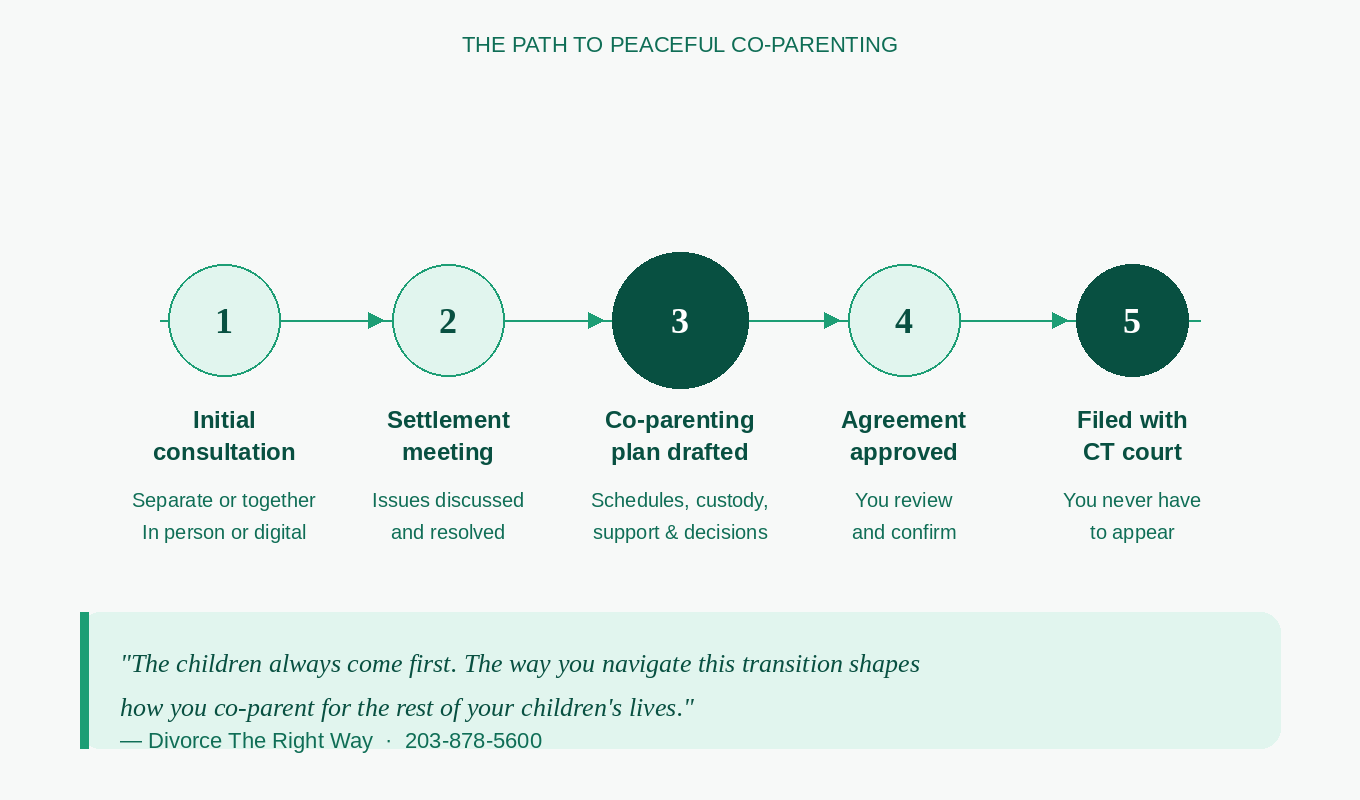
Connecticut law approaches child custody decisions on a case-by-case basis, always applying the standard of the child's best interests. While some states maintain a presumption in favor of joint legal custody, Connecticut courts evaluate each family's specific circumstances individually.
Understanding how Connecticut's framework applies to your situation, and what your rights and responsibilities are as a parent, is essential. Our family law attorneys are fluent in Connecticut family law and will ensure you have the clarity you need to make informed decisions for your family.
The DTRW Approach to Custody and Co-Parenting

At Divorce The Right Way, we have always believed that the way a family navigates divorce shapes the co-parenting relationship for years to come. Families who move through this process with intention, with cooperation rather than conflict at the center tend to build co-parenting structures that actually work.
Our non-adversarial process is designed to support exactly that. We help both parents move from the end of one chapter toward the beginning of the next, with a comprehensive plan that reflects the needs of their children and the realities of their lives.
Ready to Build a Co-Parenting Plan That Works?
If you are navigating questions about joint legal custody, parenting plans, or how to structure a co-parenting arrangement that genuinely serves your children, we are here to help.
Contact Divorce The Right Way for a free phone consultation. Our experienced Connecticut family law attorneys will guide you through your options with clarity, care, and a process designed to help your family move forward.
Call us at 203-878-5600 or visit us at our Milford law office or Orange, CT law office.
Divorce The Right Way serves Connecticut residents navigating separation and divorce. Our fixed-cost, non-adversarial process is designed to protect your family — and help you begin healing.